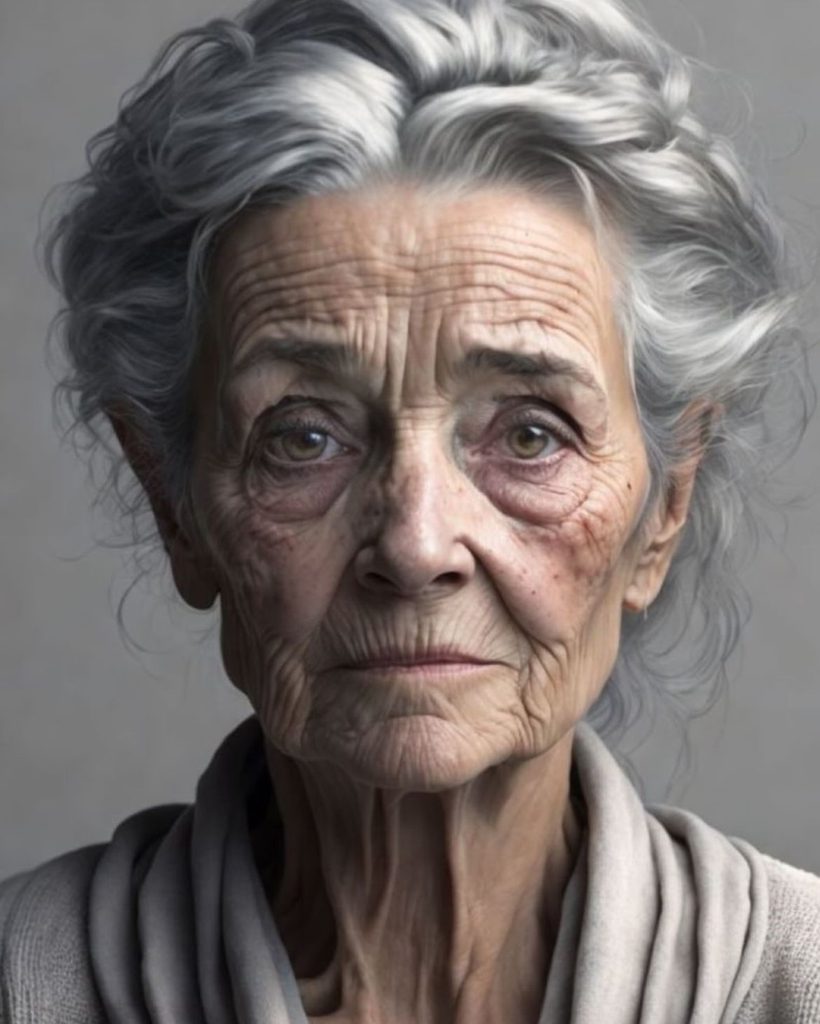
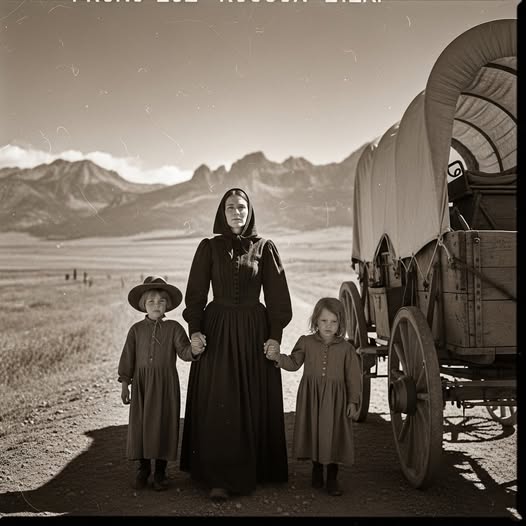
Photo Credit: 1849, Abigail Thompson, a widow with three children on the Oregon Trail
Most of my writing requires a disclaimer about violence and psychological stress, at a minimum. However this part of Kara’s life is still relatively happy and we don’t need one here.
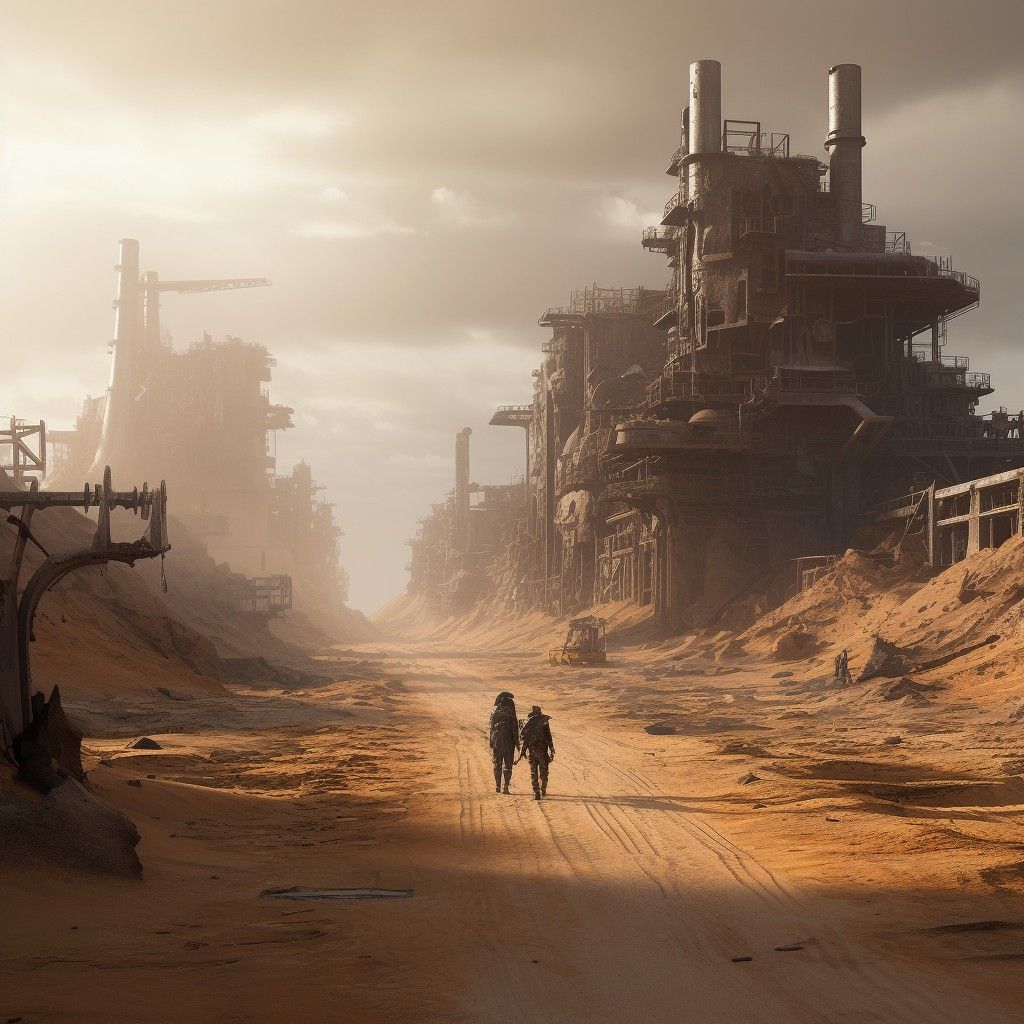
My sixth birthday was on February 6th, 2095. We had been walking in the caravan from the remains of Provo, Utah to old Las Vegas, Nevada – but neither place had existed for a long time. Las Vegas was now the domed city of Solis, high tech and high society. Provo had been overrun with Raiders. My parents’ congregation had decided to leave after they had been threatened and bullied yet again. We set off to find a better place to live.
February wasn’t the ideal time to walk that part of the country but my parents wanted better for their children and decided to sell, barter, and do god knew what else to purchase a wagon with a cover and a swaybacked horse we named Sampson.
There were four of us children. I was the oldest at six, followed by my two middle sisters Sandra, five, and Lordes, four. Henry was the last at three years old, and my favorite because he was the sweetest and liked to snuggle with his head tucked under my chin, little hand curled around my shoulder.
When we broke camp that morning my mother had smiled at me, the promise of the sun still just a whisper in the sky.
“Would you like to ride up with Papa today? No walking if you don’t want to.”
Immediately my sisters began to whine. “No walking? Why her? I don’t want to walk anymore!”
My mother shushed them. “It’s Kara’s birthday today, do you know how old she is?”
“Six!” I burst out, and shyly looked to my mother with concern that I had interrupted her. She only smiled at me again and helped me climb up next to my father while my sisters pouted on the ground. Henry was already in the back of the wagon as usual, his legs too short to keep up and too light to make a difference to the horse. He had a ragged stuffed rabbit named Cottontail that flopped over one arm at all times, and usually the other hand’s thumb was stuffed in his mouth.
As I was handed up into the passenger’s seat my father ruffled my hair, something I hated unless he did it. “How you doing, kid?” he asked, and kissed my face.
Walking, and riding, was so boring. When the sun got high in the sky the caravan, nearly 50 wagons long, stopped and set up large canopies. We broke into groups and the families studied scriptures while the older children were taught letters until lunch. After lunch most of the adults took a nap in the shade and us children would play around the cactuses. There were about 200 of us in all, the largest Mormon congregation that we knew of in what used to be the American southwest. Before the Crimson Flu there would have been thousands of us, but that was sixty years ago.
Long before my time.
Papa let me take the reins a few times that day, but mostly I rode in the covered wagon part that held our few valuable items and food stores. I rode with Henry, relaxing and making faces at my sisters out of the back flap when I thought my mother wasn’t looking.
I no longer remember my father’s face but I remember the essence of him – laughter, happiness, the feeling of being loved. His features have remained blurred to me for years now, and since I have no photographs of him I suppose it will remain that way until I die. I wonder if it is the same for my sisters, whom I have not seen or heard from in quite some time.
The caravan usually walked well into dusk before we stopped for the night, but part of the trip had been planned to walk by moonlight on nights surrounding full moon, which was tonight. So we continued without stopping for our dinner, eating cold beans and deer jerky from our supplies as the wagons swayed. After dinner my mother rummaged around in the back of the wagon and pulled out a package wrapped in a familiar cheesecloth with a wrinkled bow stitched to the top; one that had wrapped many gifts over the years for our family. She walked behind the wagon while I unwrapped it, revealing a small tin cup, dented but cleaned until it shone. I turned it over. It had my initials, “KS”, engraved on the bottom. I held it to me and smiled at my mother.
“What do you say?”
“Thank you, Momma.”
“You’re welcome, my smart girl. Now, stay in the wagon and get some sleep. We’re going to walk for a while longer tonight.”
For the next week I used that cup at every meal. Having something of my very own was an incredible rush and made me the envy of my siblings and friends. I refused to let anyone use or touch the cup.
Until the next week, when I lost everything.